A look a NPRs and assessing the probability of rate cuts in 2024
As we move through the decade, Canada faces an evolving economic landscape shaped significantly by demographic trends. The strategy to bolster the population through non-permanent residents, including work permit holders, international students, and asylum seekers, has injected vibrancy into the economy. However, it also brings to light complex challenges that need addressing. This blog post delves deeper into the nuances of these demographic shifts and their multifaceted impact on Canada’s economic horizon.
The Increasing Role of Non-Permanent Residents
Canada’s approach to managing its labor market and demographic profile has been unique. The country has welcomed a substantial number of non-permanent residents, aiming to fill immediate labor gaps and support population growth. This strategy has been particularly evident in sectors facing acute labor shortages and in the burgeoning demand for higher education among international students.
This demographic influx has served as a double-edged sword. On one hand, it has stimulated economic activity, driven demand in the housing market, and contributed to cultural diversity. On the other, it has strained infrastructure, particularly in urban centers where the demand for affordable housing has skyrocketed, leaving policymakers grappling with rising rental prices and the affordability crisis.

The closest parallel we’ve seen to the boom in non-permanent residents (NPRs) is the late 1980s which led to a massive housing boom (based on a lot of speculation), a run-up in interest rates and then on the other side of that a nasty recession. Any of that sound familiar ?
Economic Implications of Demographic Changes
The economic implications of these demographic shifts extend beyond the housing market. The increased population has boosted consumer demand, contributing to economic growth. Yet, this growth comes with strings attached. The reliance on a transient population segment can lead to volatility in demand for services and housing, potentially leading to economic instability in the face of policy changes or global economic downturns.
Moreover, the labor market dynamics are undergoing transformations. While non-permanent residents have filled critical gaps, there’s a growing conversation around the long-term sustainability of this model, especially concerning wage pressures and the integration of these individuals into the broader Canadian economy.
The Housing Market at a Crossroads
The Canadian housing market is a focal point of the demographic shift’s impact. The surge in demand for rental properties has not only increased rents but also ignited a construction boom. However, this boom raises questions about future oversupply, especially if demographic trends shift or if policy adjustments lead to a decrease in non-permanent residency applications.
Furthermore, the housing market’s response to these demographic changes is nuanced. While urban centers face acute pressures, suburban and rural areas are experiencing different dynamics, highlighting the geographical disparities in housing affordability and availability.
Naturally we cannot have a housing discussion without discussion of interest rate cuts by the Bank of Canada. While their next announcement is in April most analysts agree that we will not see a rate cut at this announcement but lets move away from speculation and dive back into the analysis.
Economic Slowdown and Recession Risks
Global and domestic economic conditions present a mixed bag of signals. However, a common thread among many forecasts is the risk of a slowdown or outright recession. Such an environment typically calls for a loosening of monetary policy to stimulate economic activity. Lowering interest rates could encourage borrowing and investing, countering the downward economic pressures and potentially averting a deeper recession.
Labor Market Adjustments
The labor market’s resilience is a key factor in the Bank of Canada’s decision-making process. While the market has been strong, there are signs of strain, with certain sectors experiencing slowdowns in hiring or even job losses. A proactive rate cut could support employment by making borrowing cheaper for businesses, encouraging expansion and hiring activities.
When I mention signs of strain I am looking at the latest Employment insurance claims which rose 4.2% nationally in January but look at Ontario’s data below:
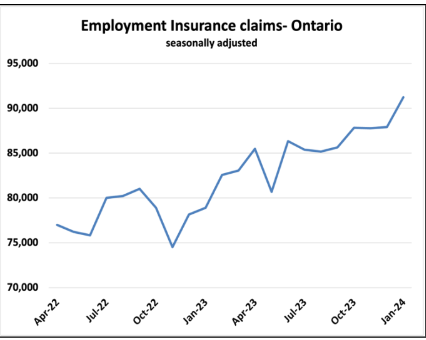
This data as you can see is the highest claims amount in the past two years
Inflationary Trends and Monetary Policy
Inflation remains a central concern for the Bank of Canada. While inflationary pressures have been high, there are indications that these pressures could ease, partly due to the aforementioned cooling in the housing market and potential decreases in consumer spending. A strategic rate cut could help ensure inflation returns to the Bank’s target range without stifling economic growth.
Global Economic Influences
Canada’s economy does not operate in isolation. Global economic trends, including monetary policy decisions in other countries, especially those of major trade partners, can have a profound impact. The Bank of Canada must navigate these international waters carefully, ensuring that its policies align with broader global economic conditions while meeting domestic needs.
The Role of Consumer and Business Sentiment
Consumer and business sentiment plays a crucial role in economic health. Lower interest rates can boost confidence by reducing borrowing costs and supporting investment and consumption. In an uncertain economic climate, positive sentiment can be a powerful tool for sustaining economic activity.
Something to Monitor?
Money supply – Canadians saw a lot of money get pumped into the system in the now widely-critized CERB infusion as that is blamed for the inflation we have now. Whether that is fair or not is not the purpose of this blog but rather to illustrate this point:
When money is pumped into the system there is the potential for inflation
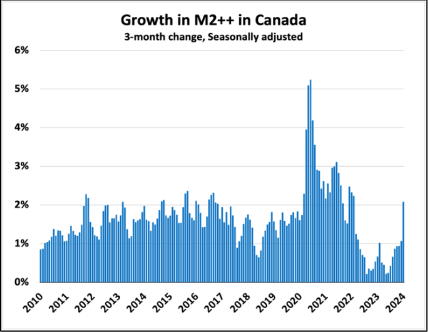
M2 is a widely followed measured of broad money which has surged by over 2% in the last 3 months alone. Plainly put – more money being circulated across the economy means more potential infation
Offsetting this increase in money supply is StatsCan data around borrowing by Canadian corps which declined 1.2% month-over-month in Janauary. This could be a function of businesses being scared to borrow or lenders hesitant to lend. Typically speaking when you see businesses stop borrowing the next step is often they start trimming jobs (mentioned above)
This is could lay the runway for a rate cut which I discussed as part of a larger YouTube video. You can watch the video by clicking here.
We went through a lot but here is a summary:
- Canada’s economy is significantly influenced by demographic shifts, primarily due to its reliance on non-permanent residents.
- The influx of non-permanent residents has led to increased demand in the rental market, causing rents to rise and affecting housing affordability.
- These demographic changes have both short-term economic benefits and long-term challenges, particularly in housing and labor market dynamics.
- Policymakers face the task of balancing population growth with economic stability, requiring adaptive strategies to address the complex implications of these shifts.
- The possibility of Bank of Canada’s interest rate cuts in 2024 is a topic of widespread speculation, influenced by demographic shifts and uncertain economic conditions.
- Key factors suggesting potential rate cuts include a cooling housing market due to demographic changes and the anticipation of economic slowdown or recession.
- Global economic trends and the actions of central banks internationally will play a significant role in shaping the Bank of Canada’s rate decision.
- The Bank faces challenges and opportunities with rate cuts, aiming to stimulate the economy while managing risks like increased debt levels and sector overheating.
- A careful balance is needed in the Bank’s approach, as its decisions will significantly impact Canada’s economic stability and growth prospects in a changing global landscape.